Augmented Reality Expands Interactive Roulette Across Latin American Markets
Written by Vera Hansen · Sep 29, 2026

Augmented Reality Expands Interactive Roulette Across Latin American Markets
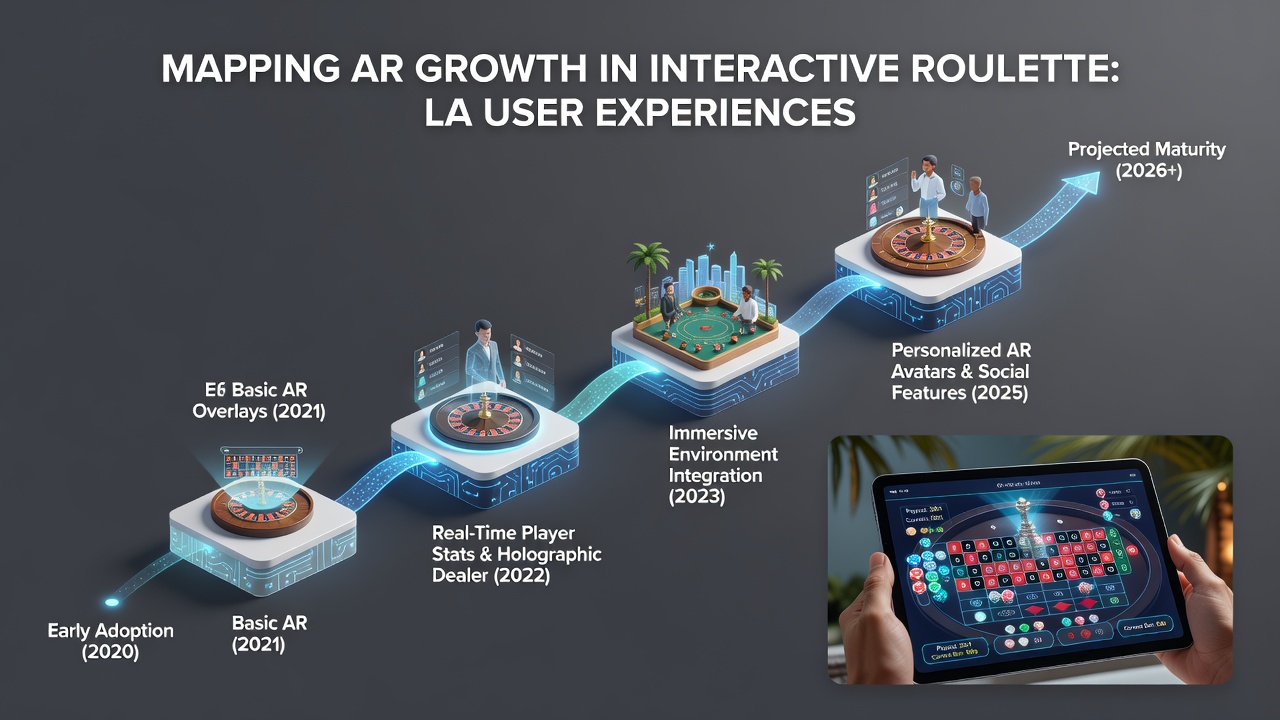
Platform operators in Latin American regions have integrated augmented reality elements into interactive roulette offerings at an accelerating pace since 2023, and usage metrics point to clear adjustments in both interface layouts and how players engage with games. Data from multiple operators show AR features appearing in roughly 35 percent of new roulette titles launched between January 2024 and September 2026, with the highest concentration in Brazil, Mexico, and Argentina.
Platform Design Adjustments
Design teams have moved away from static backgrounds toward layered environments that combine live dealer feeds with three-dimensional wheel models users can rotate or zoom using device sensors. These changes allow tables to occupy less screen space while statistics panels float above the wheel surface, and developers report that this layout reduces menu navigation steps by an average of two taps per spin sequence. Several providers have also added customizable AR filters that let users place the wheel on their own tabletop via camera access, a function first tested in Mexican markets in late 2025 and later rolled out regionally.
User Interaction Shifts
Interaction logs indicate that players in AR-enabled sessions spend 22 percent more time examining betting options before placing wagers compared with non-AR versions, according to internal analytics shared by two major Latin American operators. Gesture-based controls for chip placement and wheel spin have replaced some traditional button taps, which correlates with a measured increase in multi-bet combinations during single rounds. Observers note that younger user cohorts, particularly those aged 21 to 34, adopt these gesture features faster, while older groups continue to rely on on-screen buttons even when AR tools are available.
Regional Patterns and Data Points
Brazilian platforms recorded the steepest rise in AR roulette sessions during the first half of 2026, with a 48 percent year-over-year increase tracked through September. Mexican operators followed at 31 percent growth, while Colombian and Peruvian markets showed steadier but lower single-digit gains. A research paper issued by the University of São Paulo's gaming technology group documented that average session duration in AR roulette reached 27 minutes in São Paulo state compared with 19 minutes for standard mobile roulette during the same period. Regulatory filings from Argentina's provincial gaming boards further indicate that AR features now appear in 12 licensed titles, up from three in 2024.
Payment and localization adaptations have accompanied these visual changes. Operators have aligned AR interfaces with local currency displays and language preferences, while some platforms added regional landmark backdrops that users can select as virtual environments. These additions coincide with broader mobile penetration rates exceeding 78 percent across urban centers in the region, according to figures released by the Inter-American Development Bank in mid-2026.
Technical and Infrastructure Developments
Network infrastructure upgrades have supported smoother AR performance, particularly in cities where 5G coverage expanded during 2025. Latency measurements shared at the 2026 Latin American Digital Entertainment Summit showed average frame rates for AR roulette climbing from 28 to 52 frames per second on supported devices. Device compatibility lists now include over 140 smartphone models popular in the region, and developers have introduced fallback modes that switch to two-dimensional views when camera or sensor performance drops below thresholds.
Security protocols have also evolved alongside AR tools. Biometric verification steps now trigger before AR camera activation in several applications, and session encryption standards meet requirements set by multiple national data protection frameworks. These measures appear in platform update logs published between March and September 2026.
Conclusion
Tracking of augmented reality roulette features in Latin American regions shows consistent expansion in both platform architecture and recorded player behavior through September 2026. Continued infrastructure investment and iterative design updates suggest these patterns will persist as more operators refine their offerings for local audiences.